Flow 2026: The Modular Kitchen Strategy That Lets You Scale Without Losing Taste
There’s a trade-off that has quietly defined how Indian foodservice operates for decades. Fast or good. Scalable or special. Convenient or considered.
Ten years ago, Indian diners knew what piri-piri was. They had tasted it abroad, spotted it on menus at international QSR chains, and came home wanting it. The demand was real.
If you are currently staring at your P&L and wondering why your prime cost is bleeding despite your ingredient contracts staying relatively stable, you are looking at the wrong line item. You need to look at your utility bill. Specifically, you need to look at your LPG consumption.
There’s a quiet shift happening on Indian menus, and it doesn’t announce itself loudly. It shows up in the way a frappe feels creamier than it used to. In this way, a dessert sauce has a depth that lingers a little longer.
Chef’s Art, a trusted name in India’s HoReCa (Hotel, Restaurant, and Catering) seasonings ecosystem, is entering a new phase of accelerated growth in its 10th year as it strengthens its identity under Food Service India Pvt. Ltd. The move marks a strategic effort to build on the brand’s legacy while scaling it into a future-ready powerhouse for the food B2B solutions organized industry.
The move marks a strategic effort to build on the brand’s legacy while scaling it into a future-ready powerhouse for the food B2B solutions organised industry. As part of this strategy, Food Service India will invest in a new manufacturing plant to enhance production capacity and drive innovation. The company is also strengthening its distributor network and focusing on new customer acquisition to expand its market footprint.
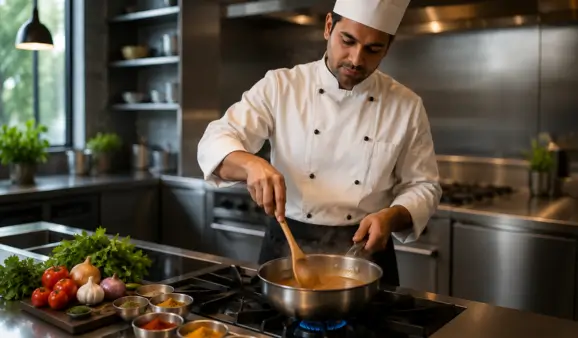
If your kitchen runs on LPG, and most Indian restaurants do, your gravies are quietly burning through your gas budget every single service. A classic makhani base, a dal makhani, and a rich korma: each one demands 60 to 90 minutes of active flame before the protein even enters the pan
If you step back and look at how Indian menus are being built right now, one thing becomes clear very quickly: the broad-stroke categories aren’t working anymore. “North Indian” and “South Indian” were always shorthand. They were convenient labels that covered a lot of ground without saying much.
As concerns around LPG availability and rising refill costs persist in several parts of India, FMCG companies are sharpening their focus on the no-cook food category, seeing it as a timely growth lever driven by both necessity and evolving consumption habits. Industry executives say that intermittent supply disruptions, coupled with higher cylinder prices, are nudging consumers toward convenient, ready-to-eat (RTE) and ready-to-prepare (RTP) options
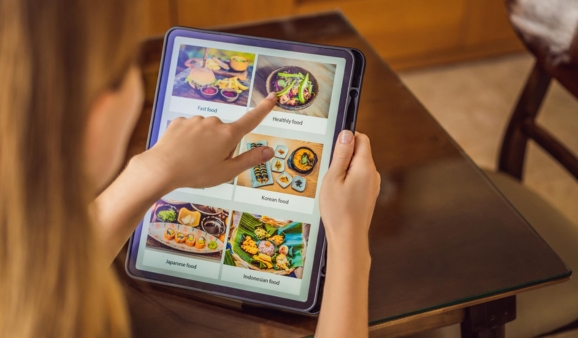
If you step back and observe how consumers interact with food today, one thing becomes clear very quickly: they decide fast. Not after reading the menu, and not after finishing the dish, but in the first few seconds.