Drinks Prepared During Holi Across India
Holi service isn’t just slow. It’s also loud, fast, and thirsty.
You’ll have people walking in after a morning of Holi fun, families dropping by in groups, and guests wanting something cold before they even look at the food menu.
That’s why drinks matter so much during the festival.
Holi isn’t only about colours. It’s about being around people, sharing food, and celebrating in a way that feels familiar. And in that moment, having the right drinks for Holi in your menu becomes the easiest win. They’re refreshing, quick to serve, and instantly feel festive without needing a full menu overhaul.
March heat across India makes beverages feel essential and not optional. A good Holi drink menu will keep your guests comfortable through long celebrations. It can also help cafés, QSRs, and dessert outlets push high-margin add-ons with minimal kitchen load.
The best part?
Most Holi drinks aren’t random trends. They’re built on smart food logic, such as cooling ingredients, hydration, digestion, and energy. That’s why they’ve survived for generations.
Now let’s break down why Holi beverages change so much across India and the classics people expect every year.
A] Why Holi Drinks Vary So Widely Across India?
Holi drinks change across India for the same reason menus change: weather, ingredients, and local habits.
In the North, you’ll see more milk-based drinks with nuts and spices. They’re filling, cooling, and easy to batch for large groups. In hotter, more humid regions, lighter flavours tend to win, such as tangy mango coolers, citrussy blends, and drinks that feel sharper on the palate.
Availability also plays a huge role.
Some areas naturally lean on dairy. Others have easier access to jaggery, raw mango, local spices, or seasonal produce. Community traditions also play an important role, as certain drinks become “festival defaults” because that’s what people grew up drinking.
Most importantly, these beverages weren’t created as fancy indulgences. They were practical refreshers built to keep you cool, hydrated, and active through a long, high-energy day.
B] Six Classic Holi Drinks That Define the Festival
These are some of the most popular traditional Holi drinks people expect to see every year, evoking familiar flavours, immediate nostalgia and an instant festival mood.
1. Thandai
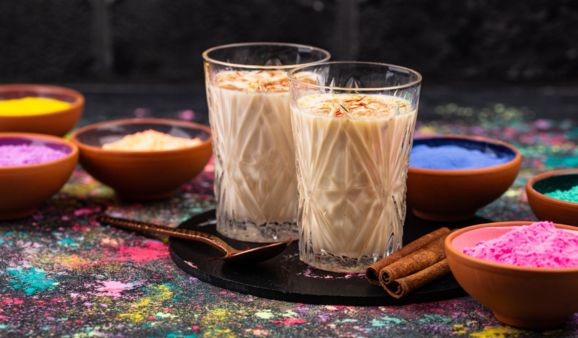
Thandai is one of the most iconic Holi special drinks, especially across North India. It’s milk-based, aromatic, and built around spices and nuts that feel rich but still have a cooling effect. The flavour usually comes from a soaked mix of fennel, melon seeds, poppy seeds, and almonds, blended into a smooth paste.
That paste is mixed into sweetened milk along with saffron, rose notes, and a mild peppery edge. Served chilled with ice, it’s the kind of drink guests ask for even before they ask what snacks are available.
2. Kanji
Kanji is old-school, bold, and addictive once people get the taste. It’s a fermented drink made by soaking black carrots in water with mustard, chilli, salt, and warming spices. It sits for a few days until the liquid turns tangy and sharp. Served cold with a little roasted cumin on top, it cuts through heavy festive food beautifully. This is a strong option when you want a refreshing drink that isn’t sweet.
3. Bhaang Ka Sharbat
For many, Holi celebrations feel incomplete without bhaang sharbat. It’s made by grinding bhaang leaves into a smooth blend with water, sugar, and spices like cardamom and pepper, then mixing it into chilled milk. People often finish it with nuts, rose petals, or mint. Since it can hit strong, it’s usually served with care and in controlled portions.
4. Lassi
Lassi is a crowd-friendly drink that works across ages. Sweet lassi is made with chilled curd, sugar, water, and a hint of cardamom. You can make it fruity with mango or rose flavours too. The salted version uses salt and cumin for a more savoury, refreshing finish. It’s easy to prep and easy to serve, and it works well with spicy snacks.
5. Kesar Doodh
Kesar doodh is usually served later in the day when the celebration starts slowing down. Milk is simmered slowly with saffron and sweetened with sugar, jaggery, or honey. A pinch of cardamom and some crushed nuts can take it up a notch. It’s warm, comforting, and very “end of Holi” coded.
6. Aam Panna
Aam panna is made from raw mango and is perfect for peak summer heat. The mango pulp is blended with sugar, roasted cumin, black salt, and regular salt. Dilute with cold water or soda, add ice, and finish with mint or lemon. It’s zesty, cooling, and one of the most reliable drinks for Holi party setups.
C] 5 Modern Twists That Elevate the Holi Drink Experience
Traditional flavours still win. But today, people also want drinks that feel lighter, more visual, and more “menu-friendly”. These twists do exactly that.
1. Gulabi Thandai
Gulabi thandai is basically a rose-led upgrade of the classic. It’s creamy, floral, and naturally pink, so it looks festive without extra effort. Blend milk with rose syrup and chopped almonds, chill it well, and serve cold. It’s one of those Holi drink ideas that works for home parties and café menus because it feels premium but stays familiar.
2. Paan Shots
This is a modern take on the post-meal paan habit, served in a quick shot format. Fresh paan is muddled, mixed with paan-flavoured syrup, then shaken hard with ice. Pour into small glasses and serve immediately. It’s bold, refreshing, and perfect when you want something portion-controlled and fast-moving during rush hours.
3. Mango Martini
Mango martini is a chilled, frosty option for guests who want a “special” drink without heavy spices. Mango is blended with lime juice and a citrus element for balance, then re-blended with ice until thick and cold. It’s bright, clean, and easy to sell as a limited-time festive special.
4. Bubble Tea Mango Lassi
This one is built for cafés and dessert outlets. Mango fruit syrup or mix is blended with yoghurt, milk, vanilla frappe, and optional cardamom for a subtle Indian touch. Finish it with mango tapioca or chewy boba. It turns a familiar lassi flavour into a modern, interactive drink that younger customers love.
5. Raw Mango Popsicles
Think of this as frozen aam panna in a grab-and-go format. Raw mango syrup is mixed with roasted cumin, black salt, regular salt, cold water, and optional sugar. Add mint if you want extra freshness. Freeze in moulds and serve. It’s simple to batch, easy to store, and perfect for a quick Holi refresh.
Also Read:
D] How HoReCa Businesses are Reimaging Traditional Holi Drinks
As a HoReCa operator, your goal should not be to reinvent Holi flavours. It’s just about tweaking the format so it works in real service conditions.
Thandai can now be used as iced thandai lattes, thandai shakes, or in cold coffee crossovers.
Rose is being served as fizzy coolers, layered drinks, and syrup-based refreshers. Mango drinks are moving beyond aam panna into frozen blends, popsicles, and premium chilled servings.
The reason is simple: execution matters.
During the festival rush, you can’t depend on slow prep or highly skilled staff for every order. That’s why you should prefer standardised gravy bases, syrups, and ready premixes that deliver the same taste every time. This allows your team to prep faster, have better consistency and train new members quicker.
A good festive drink menu should be repeatable across outlets, across shifts, and across different staff skill levels. That’s how you keep quality steady while still selling something that feels special.
E] What F&B Operators Can Learn from Traditional Holi Drinks
1. Why Familiar Flavours Drive Faster Sales During Festivals
Traditional Holi drinks teach one big lesson: festive menus work best when they feel familiar.
Guests don’t want confusing flavours during festivals. They prefer flavours they already trust, such as rose, saffron, mango, paan and cardamom. That familiarity reduces hesitation and speeds up ordering, which matters a lot when you’re experiencing high customer footfall.
Seasonal drinks can also trigger impulse buys.
Your customer may opt to skip a dessert, but they’ll happily add a Holi cooler if it feels limited-time and festive. That’s why drinks are such a smart seasonal category and have high perceived value, low kitchen load, and strong margins.
2. Why Beverages Are Ideal for Holi-Themed Menus
Holi-inspired menus work especially well for cafés, QSRs, dessert outlets, and cloud kitchens because beverages are easier to standardise than full festive food. You can build a tight menu, keep ingredients controlled, and still create a strong seasonal push.
If you want a seasonal playbook that’s proven, traditional Holi drinks already give it to you: cooling flavours, quick refreshment, and repeat demand every year.
Conclusion:
Holi drinks reflect how India celebrates in different climates with different ingredients but with the same goal: stay refreshed and keep the festival going.
From thandai and kesar doodh to kanji and aam panna, these Holi-famous drink options were always designed to work in real heat and real gatherings.
What’s changing now is how they’re being served.
Today’s Holi menus mix tradition with lighter formats, stronger visuals, and faster execution.
That’s why these classics still hold their place, not just because they taste festive but also because they fit the moment, every single year.