From 90 to 15 Minutes: How Indian Restaurants Can Cut LPG Costs with Ready-Made Gravy Bases
If your kitchen runs on LPG, and most Indian restaurants do, your gravies are quietly burning through your gas budget every single service. A classic makhani base, a dal makhani, and a rich korma: each one demands 60 to 90 minutes of active flame before the protein even enters the pan. Multiply that by the number of covers you serve, and gravy preparation alone can account for a significant share of your monthly LPG consumption.
With India’s LPG supply under increasing pressure, that is no longer a problem you can absorb.
This piece breaks down exactly:
- Where the gas goes in traditional gravy cooking,
- What a ready-to-cook base actually replaces in that process, and
- How Indian restaurants from 50-cover dhabas to full-service hotel kitchens are cutting active flame time from 90 minutes to under 15 without changing what arrives at the guest’s table.
Cut unnecessary burner time without compromising your gravy’s flavour - buy our HoReCa services and explore Sunbay’s ready-to-cook gravy solutions.
A] Why Traditional Gravies Are Gas-Heavy
To understand the solution, you first need to see the problem clearly, step by step.
1. The Step-by-Step Flame Cost of a Classic Base
A classic Indian onion-tomato base, the foundation of everything from butter chicken to kadai paneer, follows a sequence that is fundamentally slow by design. It begins with oil brought to heat, followed by whole spices blooming for 2 to 3 minutes. Onions then go in, finely chopped and stirred continuously, and need 15 to 20 minutes on a medium flame to go from raw to properly caramelised. Rush this step and the base will taste sharp and uncooked at the core, no matter how many spices you add later. This alone accounts for the first 20 to 25 minutes on the burner.
2. Why You Cannot Speed This Up
Next comes the tomato, which must cook down until the oil separates, a process that takes another 15 to 20 minutes and cannot be rushed without leaving a raw, acidic edge in the finished dish. Then come the masalas, which require 5 to 7 minutes of sautéing on high heat (the ‘bhuna’ process) to cook off the raw spice flavour. Only after this entire sequence is complete does the gravy go into its final simmer, typically 30 to 60 minutes more depending on the dish.
Total active flame time for a traditional base: 80 to 90 minutes before a single portion is ready to serve.
3. Why This Is a Commercial Kitchen Problem
This process was designed for home kitchens or large community cooking where time and gas were not commercial constraints. In a restaurant running 3 to 5 gravy-heavy dishes across two services daily, this adds up to several hours of continuous burner use per day and a correspondingly large LPG draw.
The current LPG supply situation in India has made this vulnerability acute. Restaurants across the country have reported disruptions that force them to either shorten menus, reduce batch sizes, or delay service. When your gas runs short mid-service, a gravy that takes 90 minutes to build from scratch is not just inconvenient. It is a service failure.
B] The Rise of Ready-to-Cook Bases
1. What a Ready-to-Cook Base Actually Is
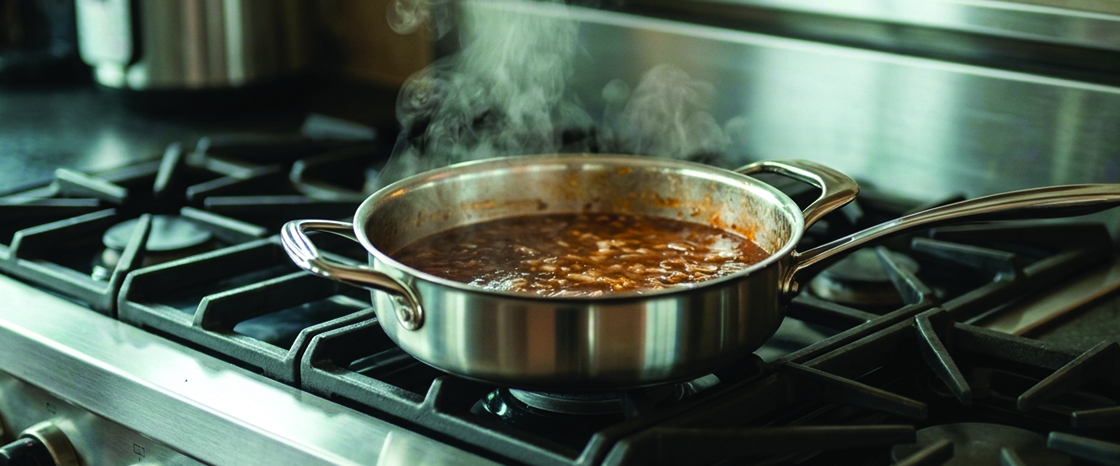
Here it helps to be precise about what a ready-to-cook gravy base actually is, because the term is often misunderstood.
A ready-to-cook gravy base is a pre-prepared concentrate in which the time-consuming ‘bhuna’ process steps–caramelising the onion, cooking down the tomato, and blooming the spices–have already been completed at production. The base arrives at your kitchen fully cooked to that stage, requiring only the addition of water, protein, and finishing spices before it is ready to serve. It does not replace the chef. It replaces the 70 to 80 minutes of foundational cooking that happens before the chef’s real work begins.
2. Does It Compromise on Taste?
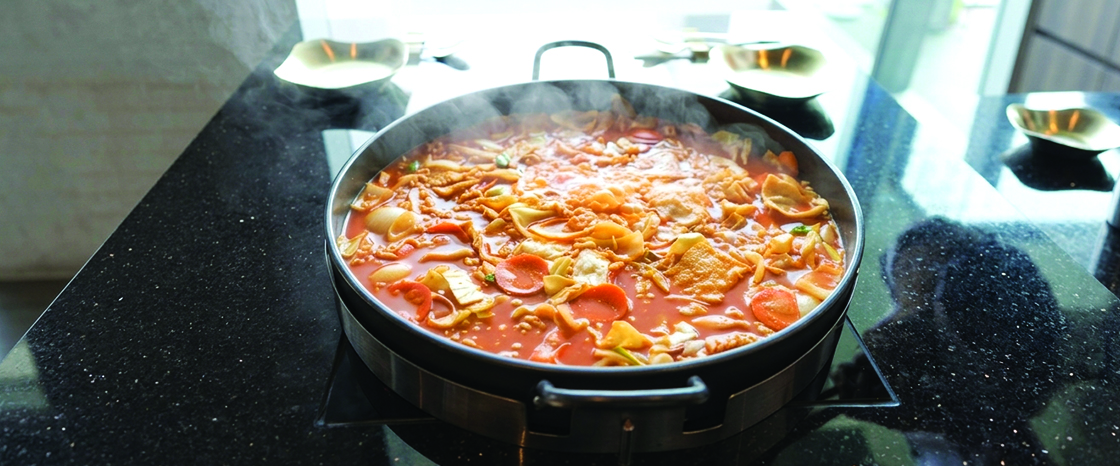
The distinction matters because the most common objection to readymade bases is that they compromise quality. That objection applies to shortcuts that skip flavour-building steps. A properly formulated ready-to-cook base does not skip those steps. It completes them under controlled conditions at production, often with more consistency than is achievable across varied kitchen staff and equipment.
3. Already the Standard in Hotel and Catering Kitchens
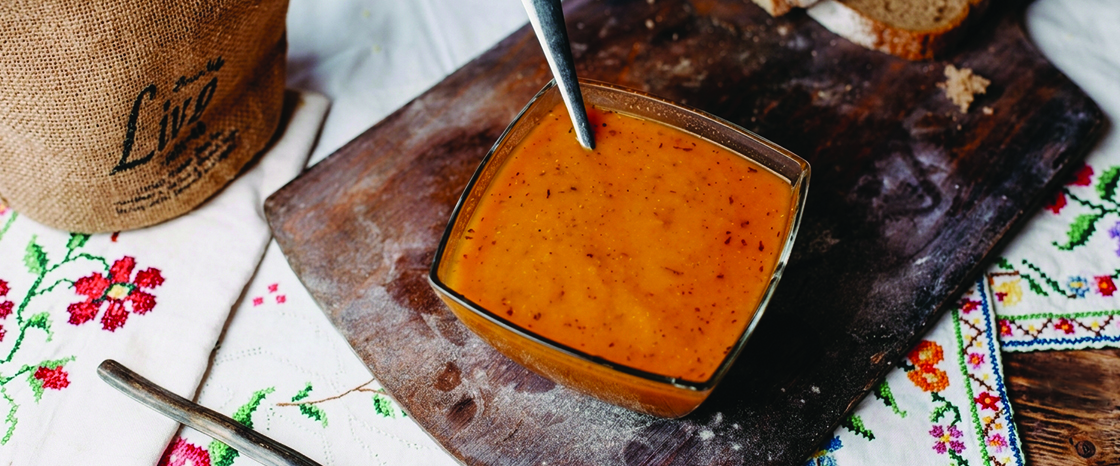
This category is already standard in Indian hotel kitchens and large-scale catering operations, where they are commonly available as “ready-made gravy for hotels” or “frozen ready-to-use base gravy”. Large hotel chains have used pre-built bases for decades precisely because consistency across shifts and multiple outlets is a requirement, not a preference.
Sunbay’s ready-to-cook gravy range, developed specifically for Indian HoReCa kitchens, operates on this same principle where
- The foundational ‘bhuna’ work is complete,
- The flavour profile is built and calibrated, and
- What remains for the kitchen is the fast, high-skill finishing that defines each dish.
View the full Sunbay Ready-to-Cook range for commercial kitchens here.
C] Gas-Time Comparison: Scratch vs Ready-to-Cook
The following comparison uses approximate flame-on times for a standard Indian gravy-based dish, assuming a commercial kitchen producing in standard batch sizes.
| Step | From Scratch (LPG minutes) | Ready-to-Cook Base (LPG minutes) | Notes |
|---|---|---|---|
| Step: Sauté base (onion, tomato, spices) | From Scratch: 20 to 25 | Ready Base: 0 to 5 | Notes: Ready base is already bhuna-flavoured; only brief tempering needed |
| Step: Simmer gravy to depth | From Scratch: 30 to 40 | Ready Base: 0 | Notes: Already achieved at production |
| Step: Add protein and finish | From Scratch: 15 to 20 | Ready Base: 10 to 15 | Notes: Same step in both workflows |
| Step: Simmer to guest-ready | From Scratch: 15 to 20 | Ready Base: 5 | Notes: Base integrates faster; less time needed |
| Step: Total active flame time | From Scratch: 80 to 90 minutes | Ready Base: 15 to 20 minutes | Notes: Approximate, batch-dependent |
Restaurants switching to ready-to-cook bases for their gravy-heavy dishes typically reduce LPG usage by up to 70% on those specific dishes. Additionally, they cut total prep time from 90 minutes to 15 minutes per batch. Across a full service with multiple gravy dishes running simultaneously, that reduction in burner time compounds significantly.
One important clarification: a ready-to-cook base does not eliminate cooking skill. It concentrates the chef’s effort where it produces the most visible result, in the finishing, the seasoning, and the protein execution.
Also Read:
D] Worked Example: The Step-By-Step 15-Minute Workflow Transition
How do you actually implement this in a busy 50-cover restaurant? Here is the step-by-step transition from the old way to the new way.
1. The Old Workflow (90 Mins):
- 0-20 Mins: High flame to brown 5 kg of onions. (High Gas Usage)
- 20-50 Mins: Adding tomato puree and ginger-garlic paste; stirring constantly over a medium-high flame. (Consistent Gas Usage)
- 50-80 Mins: Reducing the mixture until oil separates. (High Gas Usage)
- 80-90 Mins: Final seasoning and adding protein.
2. The New RTC Workflow (15 Mins):
- 0-3 Mins: Place the Sunbay RTC base in the pan with a small amount of water or stock. (Low Flame)
- 3-12 Mins: Add your pre-prepped protein (Paneer, Chicken, or Veg) and allow the flavours to meld at a gentle simmer. (Medium Flame)
- 12-15 Mins: Add your “Signature Finish”, which includes your specific spices, butter, or cream.
- 15 Mins: Service.
Result: You have saved 75 minutes of labour and, more importantly, 75 minutes of high-pressure gas consumption.
2. Real-World Operational Impact: More Than Just Gas
While cutting LPG costs is the primary driver, the switch to ready-made bases creates a “ripple effect” of efficiency across your kitchen:
- Consistency Across Staff Rotations: In many Indian restaurants, the taste of the gravy changes depending on which junior chef is on duty. With an RTC base, the “foundation” is consistent every single time, ensuring your customers get the same experience whether they visit on a Monday or a Saturday.
- Reduced Kitchen Heat: A burner running for 90 minutes generates massive ambient heat. By cutting flame time, you lower the temperature in the kitchen, improving staff productivity and reducing the load on your exhaust and AC systems (further saving electricity costs).
- Predictable Inventory: Managing 100kg of raw onions involves significant spoilage and labour for peeling/chopping. Managing 20 packs of RTC base is clean and precise and allows for 100% yield with zero wastage.
3. Checkpoint: Are You Ready to Switch?
Before making the move, perform this quick “Flame Audit”:
- Pick your top-selling gravy dish.
- Start a timer the moment the burner is turned on for prep.
- Stop the timer when that batch of gravy is ready for service.
- If that timer shows more than 40 minutes, your kitchen is a prime candidate for RTC bases.
Cut unnecessary burner time without compromising your gravy’s flavour - buy our HoReCa services and explore Sunbay’s ready-to-cook gravy solutions.
Conclusion:
Transitioning to a ready-to-cook system is not about compromising on quality; it is a strategic business decision to protect your restaurant against the volatility of the LPG market. You have seen the math: 15 minutes of flame time is objectively better for your bottom line than 90 minutes.
Your Immediate Action Plan:
- Audit: Use the Flame-Time Audit mentioned above to identify your “Gas Guzzler” dishes.
- Trial: Replace the base of one mother gravy with a Sunbay ready-to-cook base.
- Calibrate: Work with your head chef to finalise the “Signature Finish” so the taste remains uniquely yours.
Sunbay’s ready-to-cook gravy range is built for exactly this kind of commercial kitchen use. It is formulated for Indian flavour profiles, calibrated for HoReCa batch sizes, and available through Food Service India’s extensive distribution network.
The kitchen that wastes the least gas in 2026 will not be the one with the biggest LPG reserve. It will be the one that redesigned its workflow to need less.