The Ultimate Guide to Spice Blending for Restaurants and Cafes
What do you think is the critical difference between a signature menu dish and a forgettable item on your menu?
Some might think that it depends on a single high-quality ingredient. The particular batch of aged Parmigiano Reggiano or white Alba truffles imported from Italy, or perhaps a splash of rare saffron from Iran, wild Beluga caviar from the Caspian Sea, and aged traditional balsamic vinegar from Modena.
But the reality is the quality of your spice blend – that’s the secret sauce behind every successful menu dish.
As the majority of successful food industry operators would attest, crafting the perfect spice blend is both an art and a discipline. Get it right and it becomes your restaurant’s core identity.
Unlike home cooks, restaurant kitchens don’t have the luxury of experimenting on the fly. You need to get the blend right the first time and every time after that. Your kitchen’s operational speed, ingredient cost, and batch consistency also play an important part in daily success.
In this blog, we shed light on the fundamentals of spice blending. We also explain how these precise spice blends can be tailored to international tastes and how you can standardise this across your kitchen processes to maximise operational efficiency without compromising on taste.
A] Why Spice Blending Matters for Restaurants and Cafes
The right spice blend can anchor the precise taste profile of your restaurant, serving as a signature element that keeps your customers coming back for more. It can also act as a differentiating factor for your brand in a crowded market where many of your competitors have similar access to high-quality raw proteins and produce.
As your diners come to appreciate the depth of your signature spice blend, it directly impacts the perceived value of your brand even if they’re unable to identify every individual ingredient. Additionally, it provides a stable foundation for consistency throughout your menu across expanding multi-unit locations and varying kitchen shifts.
Related Reading: Signature Dishes: The Idea That Changes Everything in F&B
B] The Building Blocks of a Good Spice Blend
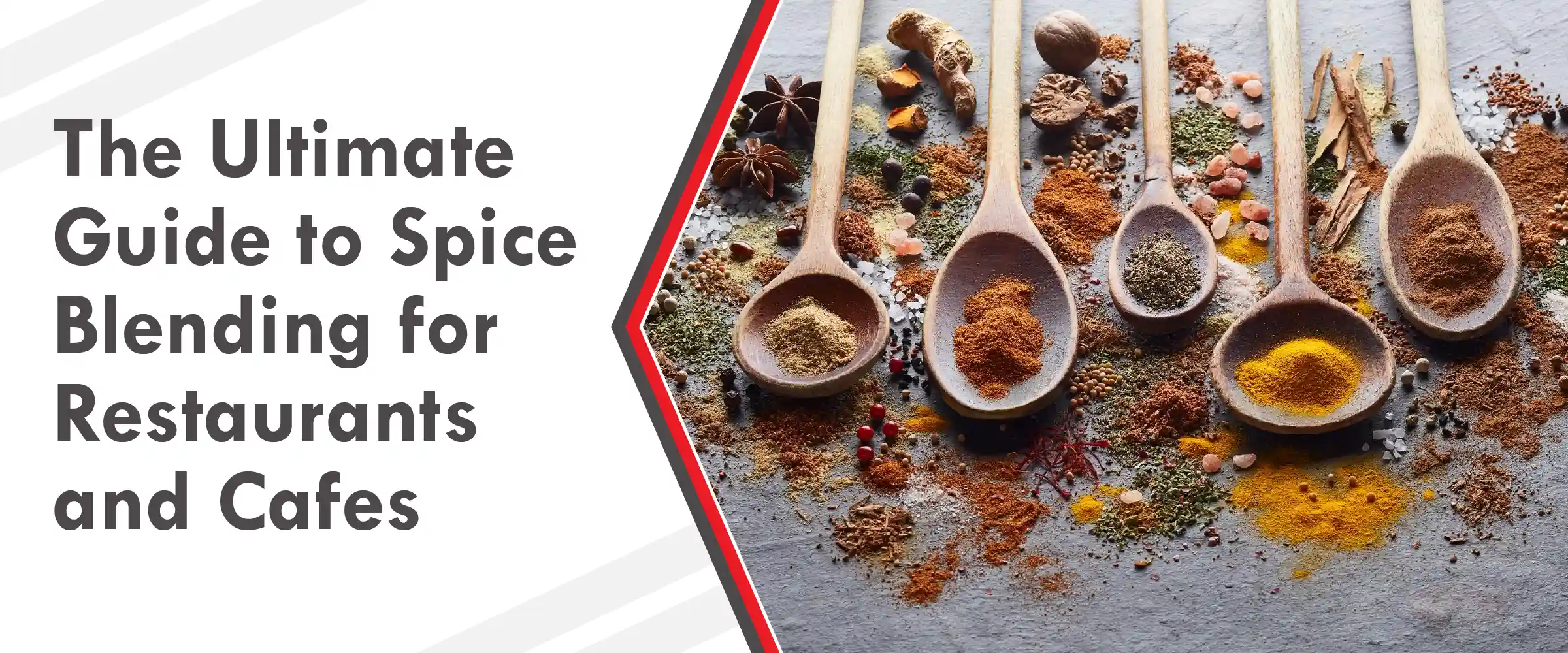
To build the right spice blend for your restaurant or food brand, you need to strike the perfect balance between core flavour notes, including sweet, tangy, bitter, and umami, rather than relying strictly on heat.
- Base Spices: Foundational spices like coriander, ground cumin, chilli powder or paprika will add structural volume to your blend, anchoring the entire flavour profile.
- Aromatics: Secondary spices like cardamom, clove, cinnamon, star anise or nutmeg add a layer of depth, complexity and distinct notes that can define the overall profile.
- Salt Balance: A basic but critical flavour enhancer to your entire blend, requiring precise calibration to elevate existing flavour notes to the next level without overpowering your customers’ palates.
- Herbal Lift: Dried herbs like kasoori methi (dried fenugreek leaves), mint, sage, or parsley add an essential aromatic note to your blend, appealing to your customers long before your dish lands on the table.
C] Popular Spice Blend Profiles Worth Knowing
If you want to cater to specific regional flavour profiles, you should start by mastering established spice blends that already appeal to a large section of your target market.
- Curry Powder: A staple of the Indian kitchen, it consists of an earthy, warm blend of spices such as turmeric, cumin, and coriander.
- Harissa: A North African spice blend that is rapidly gaining popularity in Indian menus. This spice blend combines chillies, garlic, and coriander for a complex, smoky heat.
- Za’atar: A popular spice blend originating from the Middle East combining wild thyme, savoury sumac, and toasted sesame seeds.
- Jerk Seasoning: Jerk seasoning brings a vibrant Caribbean profile to your menu, featuring thyme, scotch bonnet peppers, and aromatic pimento.
- Piri-Piri: Very few Indian restaurants these days don’t include a piri-piri-themed section on their menu; such is the popularity of this fiery African bird’s-eye chilli blend across fries, grills, and appetisers.
- Tandoori Masala: The heart of every Indian restaurant kitchen and menu, this deeply smoky, spiced mix is central to a wide variety of roasting, grilling, and gravy-based dishes.
- Cajun Seasoning: The Cajun spice mix offers a bold, peppery combination suited for fried items, seafood, and blackened dishes.
D] The Challenge of Blending In-House
You might be intrigued by the idea of creating your own signature house-made blend. When you think about it from an operational efficiency and profit standpoint, it’s an absolute no-brainer.
But the reality of manual in-house production is far different.
Your kitchen staff will have to deal with significant operational friction such as batch-to-batch inconsistencies and high labour overhead during peak service hours.
- Batch Variances: If your measuring is not standardised, it can lead to imprecise calibrations from shift staff. This, in turn, can lead to inconsistent flavour profiles across blends.
- Sourcing Fluctuation: If you’re constantly switching between supplier sources or dealing with unpredictable harvest conditions, your blends’ raw spice potency and essential oil content can also get affected.
- Staff Turnover: You risk institutional knowledge regarding precise blend ratios when your kitchen suffers from high staff turnover.
- Storage Degradation: The flavour profile of your spice blend can also be impacted by improper storage conditions, which can accelerate flavour loss and cause raw blends to taste flat or off over time.
E] Why Consistency Is Non-Negotiable at Scale
Your diners expect the same culinary experience from their favourite dish every single time. It doesn’t matter if it’s a Tuesday lunch or a Sunday dinner; they expect the exact same signature taste and quality every single time.
A quick and easy way to erode their trust is through inconsistent seasoning that leads to batch-to-batch inconsistencies and unpleasant eating experiences. This also hurts your brand equity in the long run.
If you operate across multiple outlets, maintaining identical sensory experiences across each location becomes even more complex. Standardising the spice inputs of your signature blend will not only help you to eliminate batch variability; it will also protect your brand’s hard-earned reputation built around your signature menu items.
Related Reading: How Consistent Flavour Helps Modern Restaurants Achieve a Healthy Balance in 2026.
F] How Ready-Made Seasonings and Spice Mixes Solve This
FSIPL’s extensive seasonings and spices ranges help deliver chef-tested ingredient ratios for your kitchen’s signature spice blends. This eliminates any dependence you may have on manual measuring or on your line cook’s memory during busy prep cycles.
This approach can also help reduce your brand’s dependency on specialised in-house culinary expertise while also accelerating your kitchen’s prep time during high-volume service hours. Standardising your spice mixes will also help simplify your kitchen onboarding process. New members of your kitchen staff will now be able to execute complex dishes consistently without having to master ultra-precise proprietary spice blend recipes.
G] Beyond Dry Spices: Marinades, Sauces, and Gravies
If your goal is achieving flavour consistency, then it’s important to understand that it extends beyond dry seasoning rubs. You will have to dedicate the exact same level of consistency and execution across your wet culinary applications as well.
Our proprietary marinades and coatings are precisely calibrated to ensure uniform moisture retention, crisp coating texture, and balanced taste across both protein and vegetable offerings. We also include complementary sauce premixes and taste enhancers as part of our product range to help your staff maintain rich flavour notes across finishing glazes, pan sauces, and your signature gravies.
Our specialised gravy bases also enable your kitchen to recreate classic gravies without recreating complex, multi-stage spice layering from scratch every morning.
H] Storage and Handling Best Practices to Retain Flavour
Maintaining the flavour potency of your signature blends by prolonging their shelf life requires following strict storage procedures:
- Environment Control: All your seasonings must be stored in a cool, dry area. They should also be kept away from direct heat sources like ranges and fryers.
- Sealed Containers: Ensure that your products are kept in industrial-grade storage containers with sealed packaging. This prevents any moisture absorption and volatile oil loss from your spice blends, protecting their flavour integrity.
- Inventory Rotation: Clearly label all your storage containers with opening or preparation dates. This will help you to enforce a strict first-in, first-out stock rotation.
- Commercial Advantage: Lab-tested commercial spice blends like the ones FSIPL develops offer enhanced shelf stability compared to your raw in-house mixes due to strict quality controls.
Conclusion
By perfecting and consistently recreating your own signature spice blend, you elevate your menu to a level that other average ones can’t compete with. The key to your diners choosing you over competing brands is maintaining uncompromising consistency across every dish, shift, and location.
By relying on FSIPL’s advanced expert-made standardised food solutions, you can maintain your brand’s culinary authenticity at a commercial scale. Explore our comprehensive range of professional seasonings, marinades, and sauce bases that provide your kitchen with the exact tools needed to deliver exceptional, consistent flavour in every dish, every single time.